
Pest Control Cape Town
Fishmoth & Clothes Moth Control Cape Town
Protect precious wardrobe assets, natural heirloom textiles, historical books, institutional archives, and sensitive storage inventories from destructive fishmoth and clothes moth degradation. Our SABS-compliant, low-toxicity targeted molecular applications isolate and neutralize invasive textile pests inside Cape Town homes, museums, libraries, and high-compliance hospitality facilities without risking delicate fabrics.
What to look for
Textile Pests Thrive in Quiet Storage Zones
Keratin-digesting clothes moth larvae and starch-feeding fishmoths multiply stealthily within dark, undisturbed architectural voids and static storage environments. Long-term structural elimination depends entirely on executing deep diagnostic inspections of hidden harborages rather than relying on standard over-the-counter surface repellents.
Common warning signs
- Irregular Structural Fabric Loss: Small, scattered holes, structural fiber thinning, or grazed patterns surfacing visibly on premium wool, organic silk, cashmere, heavy upholstery, area rugs, or stored seasonal garments.
- Active Thysanura (Fishmoth) Tracking: Fast-moving, silver-scaled wingless insects discovered darting inside dark wardrobes, built-in bathroom cabinets, skirting perimeters, bookshelves, or high-humidity storage spaces.
- Cryptic Lepidopteran Larval Signatures: Translucent crawling larvae, fine silken webbing tubes, or cylindrical protective fiber casings hidden inside dark wardrobe crevices, linen closets, or textile storage bins.
- Cellulolytic Archival Material Damage: Extensive surface grazing, scraped paper borders, or material loss appearing along the edges of precious books, legal documents, inventory labels, or cardboard storage boxes.
- Microclimate-Driven Population Surges: Insect activity escalating aggressively within poorly ventilated interior cupboards, unsealed crawl spaces, damp basement facilities, or humid coastal property zones.
- Persistent Inter-Wardrobe Contamination: Structural fabric destruction spreading systematically from garment to garment despite executing routine domestic clothes laundering or deploying retail mothballs and cedar blocks.
Before professional treatment
Safe DIY Steps You Can Take First
These steps can reduce spread before treatment. Focus on storage hygiene, humidity control, and isolating vulnerable natural fibers.
Cleanse Internal Storage
Vacuum all cabinetry interiors, baseboard channels, structural shelving seams, and fabric bins deeply to mechanically extract allergen dust, microscopic egg clusters, and destructive larvae.
Regulate Ambient Humidity
Optimize natural cross-ventilation corridors, deploy active dehumidifying systems, and completely avoid storing sensitive inventory within damp, poorly ventilated basements or unsealed coastal interior zones.
Isolate Organic Fibers
Seal vulnerable vintage woolens, authentic silks, high-value cashmere garments, historical documents, and natural area rugs securely inside heavy-duty, clean, airtight protective sealed storage containers.
When to call Enviro-Safe
When Localized Mitigation is No Longer Enough
Professional help becomes essential when textile pests threaten irreplaceable fabrics, archives, sensitive interiors, or humidity-prone storage environments.
- Irreplaceable Financial Asset Endangerment: Active larval feeding repeatedly targeting premium wool carpets, imported silk drapery, collector rugs, customized corporate uniforms, or luxury commercial hospitality linens.
- Irreversible Curatorial Value Loss: Irreplaceable historical manuscripts, corporate record books, barcode labels, museum display pieces, or municipal library assets showing active insect boring patterns.
- Deep Structural Harborage Infiltration: Breeding populations persisting deep inside architectural gaps, behind wall paneling, underneath embedded carpet grippers, or within inaccessible interior floor voids.
- Humid Coastline Infestation Recurrence: Pest outbreaks continuously returning within damp subterranean rooms, beachfront storage complexes, or coastal properties suffering from high ambient humidity.
- Sensitive Low-Toxicity Operational Mandates: Your facility requires highly specialized, odor-free, non-volatile target applications safe for deployment around sensitive historical artifacts, children, chemical-sensitive occupants, or pets.
Why professional control matters
Relying on store-bought repellents fails because these products merely scatter active adult insects while leaving microscopic egg deposits and ravenous larvae thriving inside structural cracks and structural dust zones. Rooted in our public health heritage, Enviro-Safe implements an elite curatorial protocol. We combine meticulous target tracking, humidity modification guidance, and targeted low-toxicity residual applications to guarantee absolute protection for your highly sensitive assets.
Treatment protocol
Our Fishmoth & Clothes Moth Control Protocol
Our technicians match the treatment method to pest biology, textile sensitivity, storage architecture, humidity conditions, and occupant safety requirements.
Inspect
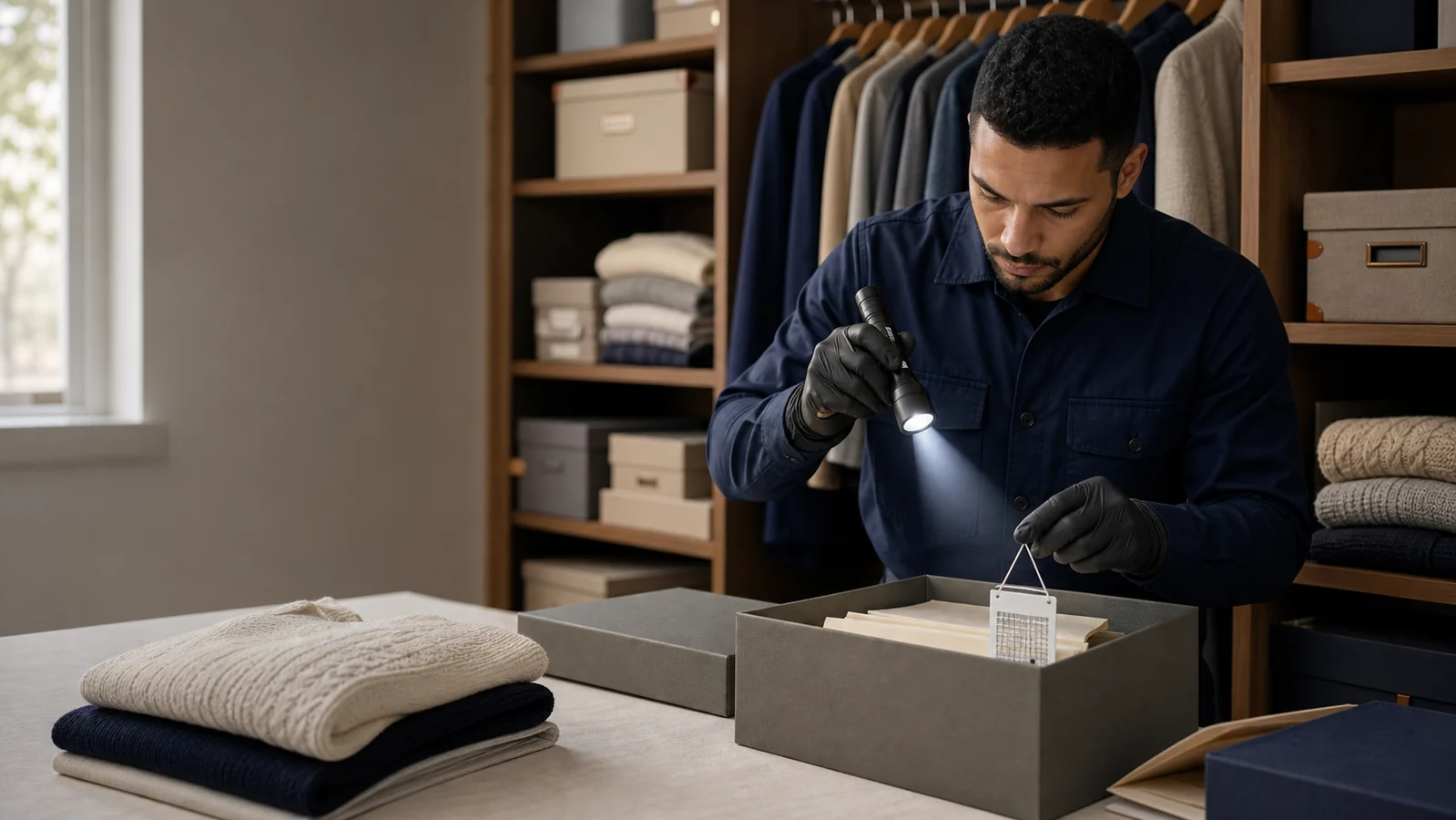
We execute an exhaustive visual and tracking analysis across internal cabinetry framing, textile storage cases, antique books, low-pile rugs, structural skirting boards, and moisture cavities.
Classify
Our specialists systematically identify the specific pest group, differentiating between primitive silverfish behavior, fabric-boring clothes moth lifecycles, and simple environmental moisture degradation before implementing remediation.
Prepare
We deliver precise pre-treatment protocols, orchestrating clothes laundering, sub-zero blast-freezing schedules, archival document quarantine barriers, and meticulous mechanical vacuum extraction workflows for maximum efficacy safely.
Remediate
Licensed field technicians deploy specialized, odorless, low-toxicity micro-encapsulated formulations and natural insecticidal dusts directly inside concealed cabinetry joints, baseboard gaps, and structural harboring points safely.
Protect
We deliver data-backed environmental engineering directives, optimizing structural air-flow patterns, interior ambient humidity thresholds, and species-specific pheromone tracking devices to ensure permanent structural preservation outcomes.
Fishmoth and clothes moth FAQ
Frequently Asked Biological & Operational Questions
Why are standard supermarket mothballs and cedar blocks failing to stop my clothes moth problem?
Retail mothballs and cedar rings act purely as mild deterrents to adult moths looking for a place to lay eggs; they possess absolutely zero insecticidal power against existing infestations. The actual destruction of your fabrics is executed entirely by the hidden, crawl-stage larvae, which continue to feed aggressively on your woolens and silks regardless of scent barriers until targeted directly.
What structural factors make Cape Town properties exceptionally vulnerable to severe fishmoth infestations?
Cape Town’s prominent coastal margins introduce sustained indoor relative humidity profiles, which primitive fishmoths require to survive and reproduce efficiently. Furthermore, historical structures and homes featuring vintage masonry cracks, old timber floorboards, and cellulose-rich wallpapers supply an endless food source of starches, glues, and organic dust grains inside unventilated zones.
Are your specialized archive and textile treatments safe for sensitive historical papers and museum collections?
Yes, absolutely. True to our health-inspector-founded legacy, we do not utilize volatile, corrosive broadcast wet sprays over fragile assets. We implement a non-destructive conservation protocol combining ultra-targeted, micro-residual placements within empty structural voids and cracks with highly specific biological monitoring traps, ensuring zero direct contact with your delicate textiles or historical papers.
Related pest services
Other Pest Control Support
Request a fishmoth or clothes moth assessment
Tell Us What Is Being Affected
Share the affected rooms, materials or stock, your suburb and the type of property. Our team will recommend the most practical next step.
- Tell us whether activity is affecting clothing, textiles, books, cupboards, archives or stored materials.
- Include whether the property is residential, retail, hospitality, a museum or another specialist environment.
- For urgent concerns, call 021 976 8966 for faster routing.
Get a Fishmoth or Clothes Moth Quote
Complete this short form and our team will come back to you with the appropriate next step.
Book an inspection
Need Textile or Archival Pests Controlled Permanently?
Safeguard your valuable designer wardrobe, historical book assets, imported area rugs, and sensitive storage files with Cape Town’s premier health-inspector-founded environmental specialists. Contact our licensed, P-registered team now for a meticulous, confidential risk evaluation and transparent quote.