
Pest Control Cape Town
Wasp Nest Removal Cape Town
Neutralize aggressive wasp colonies and eliminate nesting liabilities safely with precision, inspection-led treatments. Our SABS-compliant and licensed mitigation strategies manage high-risk, elevated, and structurally embedded nests across Cape Town homes, schools, public hospitality venues, and strict industrial facilities.
What to look for
Wasps Become Dangerous Around Active Nests
Wasps are fiercely territorial stinging pests that exhibit highly aggressive, defensive behavior when their nesting architecture is approached or disturbed. Left unmanaged, active colonies introduce significant medical liabilities and physical safety hazards for children, visiting guests, commercial staff, and facilities maintenance teams.
Common warning signs
- Concentrated Flight Vectors: Streamlined, recurring insect traffic entering roof eaves, masonry wall gaps, window frames, patio decks, or outbuildings.
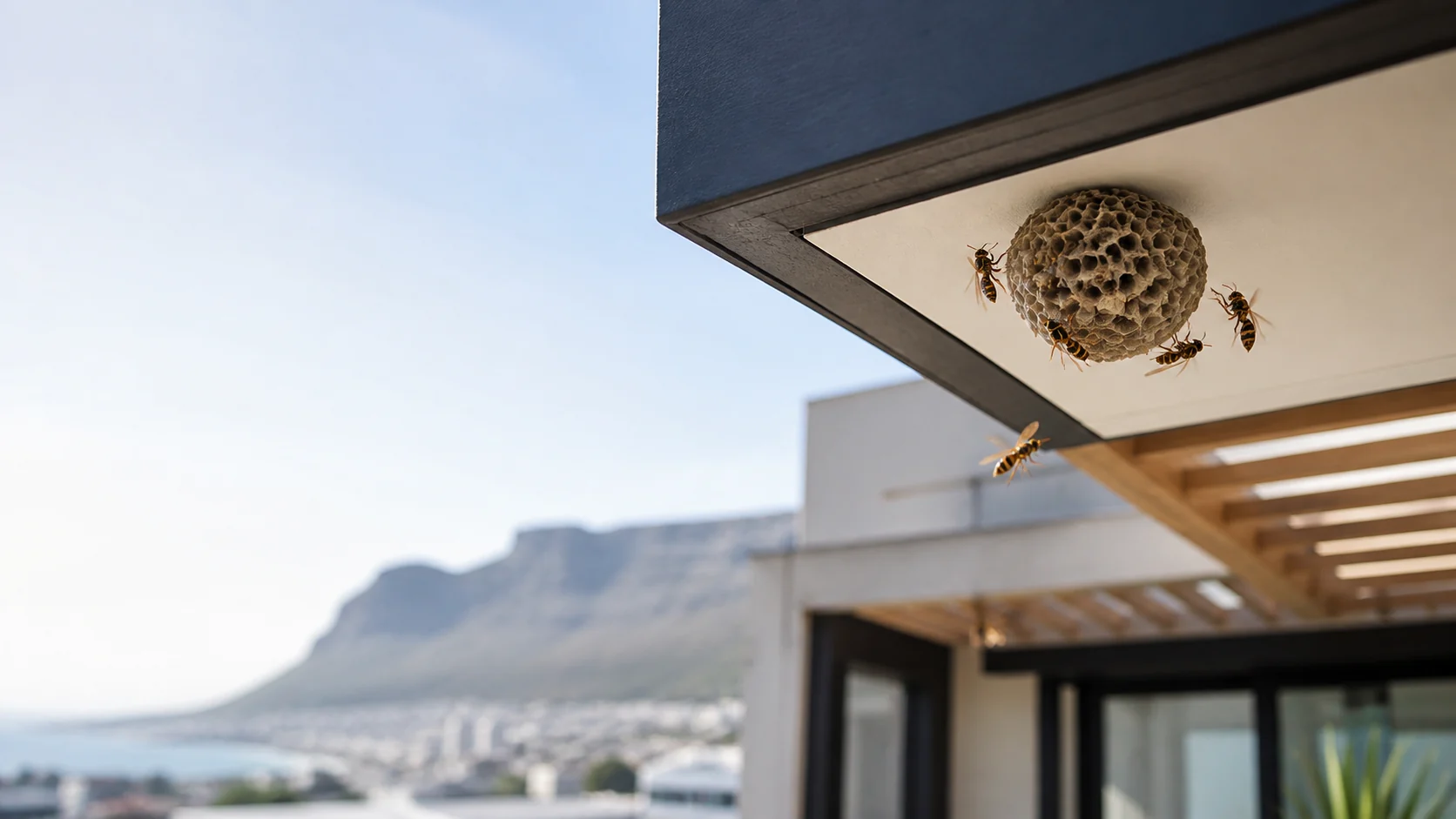
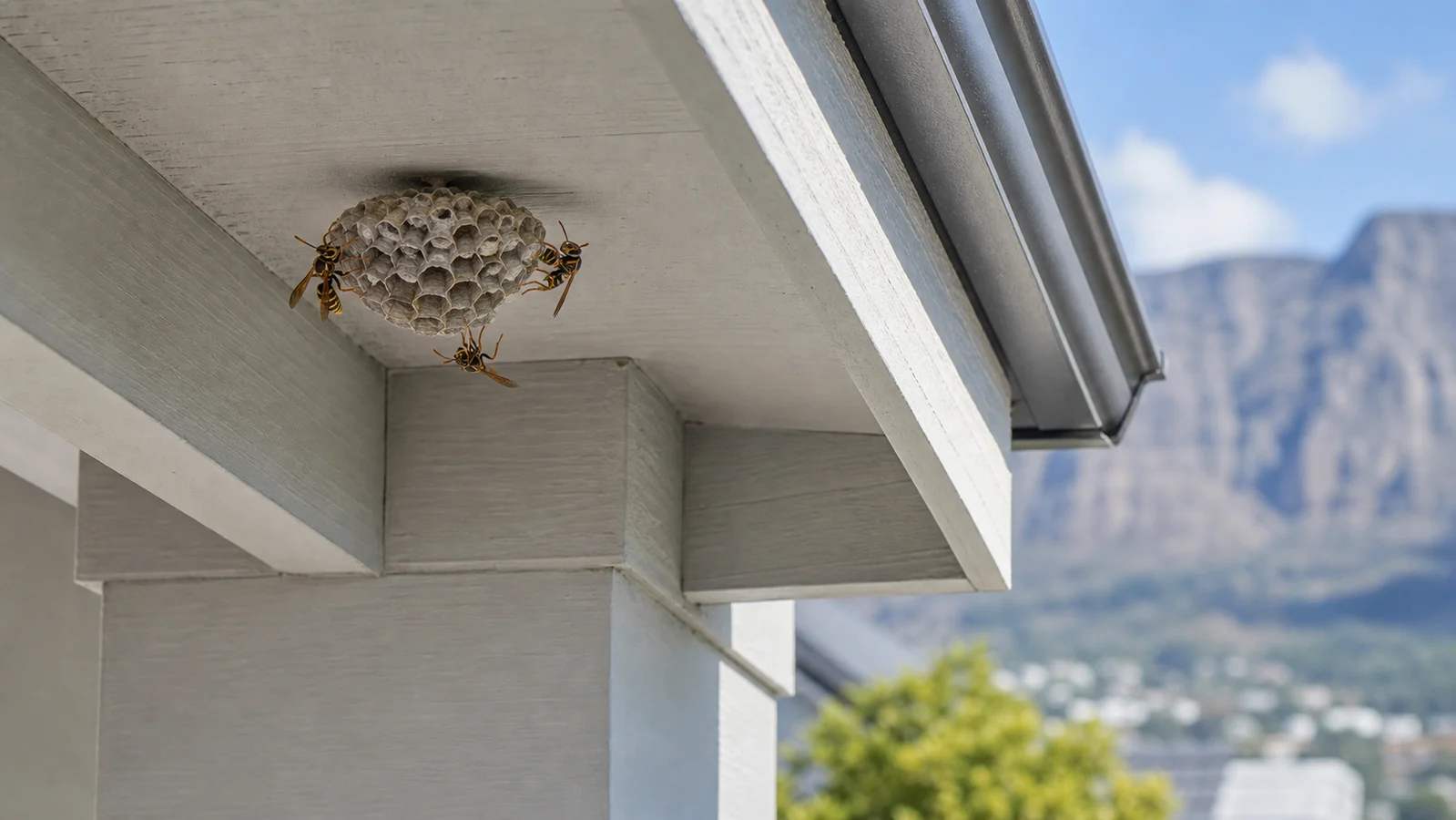
- Visible Nest Architecture: Exposed paper-mache or comb-like mud structures adhering under roof overhangs, gutter lines, structural beams, or dense garden branches.
- Hyper-Active Foraging Accumulations: High insect counts gathering heavily around open refuse bins, outdoor sculleries, sugary beverage zones, or public al fresco dining areas.
- Elevated Stinging Liabilities: Heightened defensive activity directly obstructing primary building entrances, children’s play parks, commercial loading bays, or pedestrian walkways.
- Internal Structural Auditory Signs: Distinct buzzing, clicking, or scraping sounds radiating from internal drywall partitions, ceiling voids, or enclosed structural cavities.
- Post-Displacement Recurrence: Displaced insects aggressively attempting to rebuild a colony in the exact same location after a visible nest was blindly knocked down.
Before professional treatment
Safe DIY Steps You Can Take First
These practical steps can reduce pressure and improve treatment success. Avoid unsafe chemical mixing, unlabelled pesticides, and risky access work.
Restrict Immediate Access
Enforce a strict exclusion perimeter around the suspected nesting site, keeping young children, domestic pets, and staff entirely clear of the flight path.
Avoid Entry Blockages
Never seal or structurally block an active nest entrance, as this desperately forces defensive wasps inward into living quarters or triggers swarming.
Sanitize Outdoor Attractants
Secure all perimeter refuse bins, immediately wash down sweet liquid spills, and cover external food assets while awaiting professional on-site backup.
When to call Enviro-Safe
When Localized Mitigation is No Longer Enough
Professional help becomes essential when the nest location, occupant exposure, access risk, or species uncertainty creates a direct safety liability.
- High-Access Environmental Hazards: The active nest is positioned inside complex roof voids, structural eaves, high-elevation trees, or deep sub-decking cavities.
- Public Space Vulnerability: Stinging vectors are establishing adjacent to high-traffic educational fields, healthcare spaces, customer zones, or busy commercial perimeters.
- Anaphylactic Health Liabilities: Anyone residing or working on the property has documented insect venom allergies or histories of severe dermatological reactions.
- High-Traffic Spatial Encroachments: The colony entrance sits immediately adjacent to high-use entry doors, ventilation intakes, pedestrian walkways, or entertainment patios.
- Protected Species Ambiguity: You require professional identification to safely differentiate between aggressive wasp species and ecologically protected Cape Honeybees.
Why professional control matters
Blindly attacking a wasp nest with retail sprays or water hoses frequently triggers an immediate pheromonal alarm, causing the entire colony to attack in defense. True to our health inspector heritage, Enviro-Safe evaluates specific species biology, elevation constraints, and public risk vectors before executing an intervention. We completely neutralize the colony nucleus while ensuring zero chemical drift or occupant exposure.
Treatment protocol
Our Wasp Nest Removal Protocol
Our technicians match the treatment method to the pest biology, site layout, occupant risk, and compliance requirement of the property.
Confirm
We execute a thorough visual and thermal tracking analysis to isolate the primary nest core, active flight corridors, and adjacent structural risks.
Plan
Our specialists configure a tailored access blueprint, systematically evaluating roof pitches, ladder mechanics, structural confined spaces, and public pedestrian safety perimeters.
Remediate
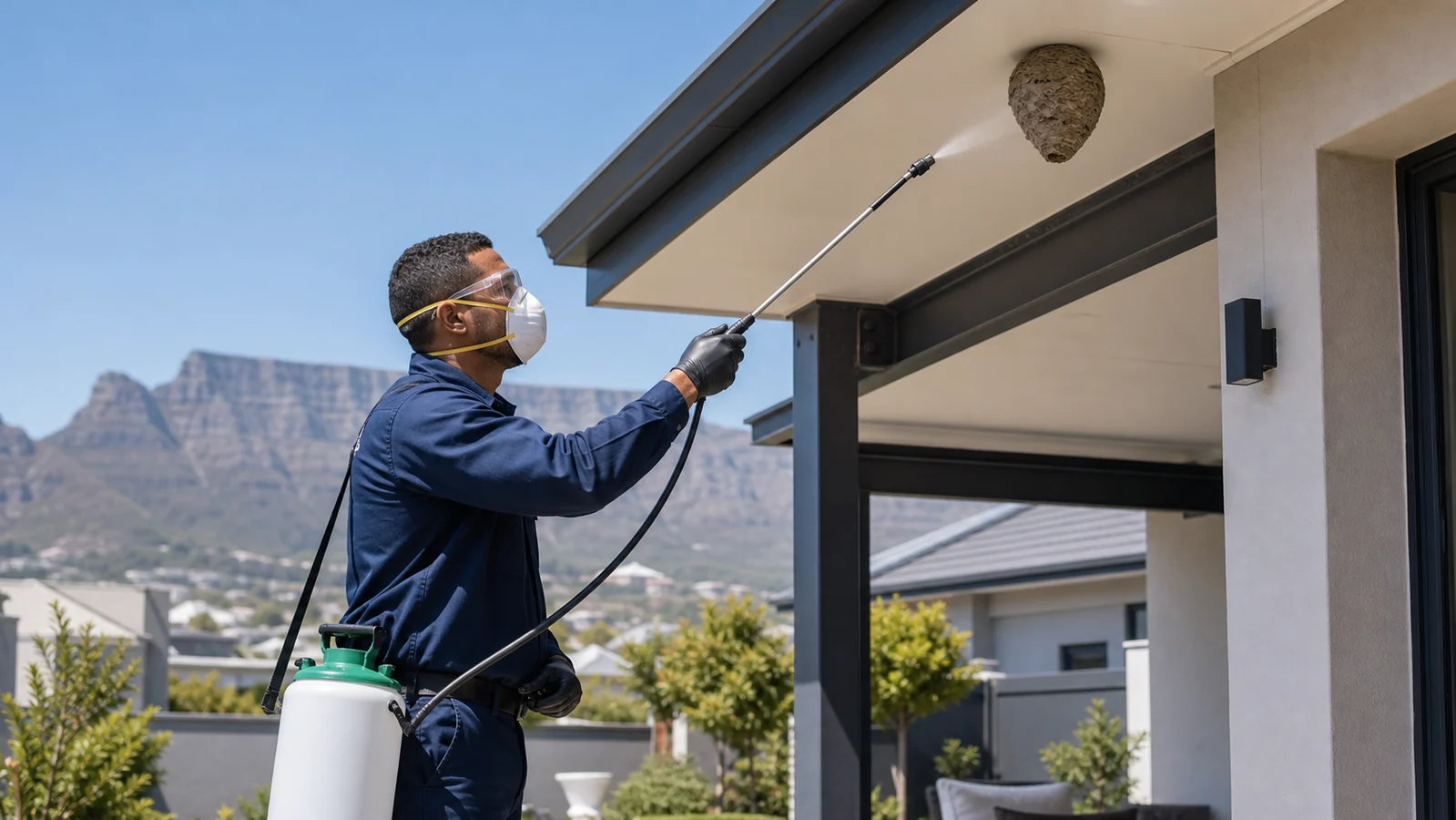
Licensed field technicians inject non-volatile, high-knockdown professional formulations directly into the heart of the nest structure, ensuring immediate colony neutralization.
Manage
We manage late-returning foraging traffic by leaving strategic, micro-residual barrier deposits, while providing clear operational directives regarding safe cleanup waiting windows.
Prevent
We perform an analytical structural audit, mapping vulnerable eave lines, masonry gaps, and open expansion joints to permanently prevent seasonal re-nesting.
Wasp nest removal FAQ
Frequently Asked Biological & Operational Questions
What is the difference between a wasp nest and a bee colony under South African regulations?
Wasps are predatory pests with smooth bodies that can sting repeatedly, and their nests are built from paper or mud. Cape Honeybees (Apis mellifera capensis) are protected, highly beneficial environmental pollinators with hairy bodies. Enviro-Safe strictly differentiates between these species; we humanely neutralize destructive wasp risks but prioritize ethical relocation for protected bee colonies via registered apiarists.
Why do wasp nests become exceptionally dangerous during Cape Town’s peak summer months?
As summer temperatures rise across the Western Cape, wasp colonies reach their maximum population capacity and reproductive maturity. The dry, hot weather spikes their metabolic demand for moisture and sugars, making foraging worker wasps significantly bolder, more aggressive, and highly territorial around backyard braais, pools, and public outdoor spaces.
Do you physically remove the nest structure immediately during the service visit?
For maximum safety and efficacy, we do not always tear down the nest layout immediately. Foraging worker wasps out in the field must return to the nest site over the subsequent 24 hours. By leaving our specialized micro-residual formulations active inside the nest matrix, these returning foragers are systematically eliminated as they arrive, preventing them from surviving to build a brand-new satellite colony.
Related pest services
Other Pest Control Support
Request a wasp assessment
Tell Us Where the Nest Is
Share the nest location, your suburb and the type of property. Our team will recommend the safest practical next step.
- Tell us whether the nest is in an eave, roof void, tree, wall cavity or another difficult-to-access area.
- Include whether there is active flight near people, entrances, pets or work areas.
- For urgent concerns, call 021 976 8966 for faster routing.
Get a Wasp Removal Quote
Complete this short form and our team will come back to you with the appropriate next step.
Book an inspection
Need an Active Wasp Nest Neutralized Safely?
Do not disturb an active colony or compromise your facility’s safety. Trust Cape Town’s premier health-inspector-founded team for rapid, licensed, and certified wasp remediation. Contact our P-registered specialists now for a hassle-free quotation.